

Cholangitis: Causes, Complications and Treatment
Cholangitis is a condition that affects the bile ducts and can lead to severe health issues if left untreated.
First, in this comprehensive article, we will explore about Cholangitis: Causes, Complications and Treatment.
Understanding Cholangitis
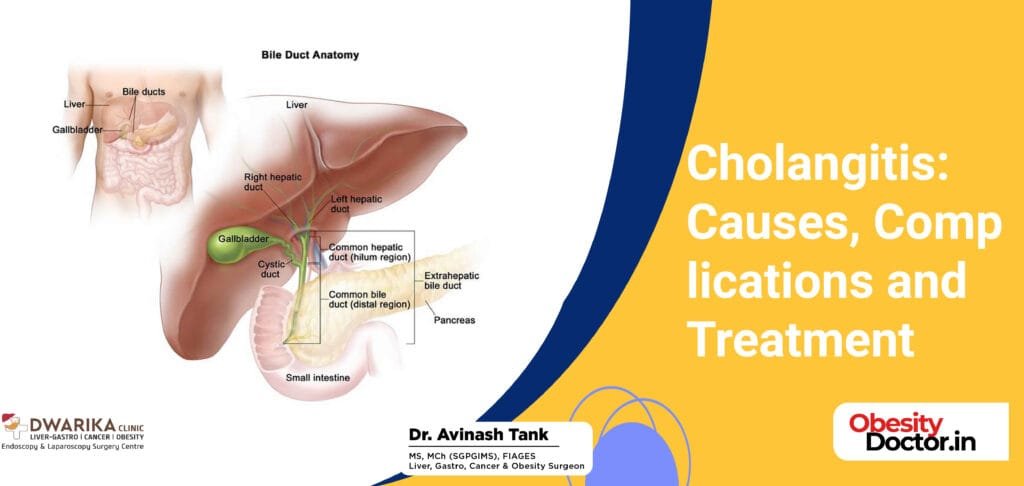
Cholangitis, a medical condition marked by the inflammation of the bile ducts, plays a crucial role in transporting bile from the liver to the gallbladder and subsequently to the small intestine.
This inflammation can stem from a multitude of factors.
Consequently, it can give rise to a spectrum of symptoms, encompassing abdominal pain, fever, and jaundice.
Causes of Cholangitis
Now, let’s dive into what causes Cholangitis.
You see, understanding the reasons behind Cholangitis is essential.
So, let’s explore the factors that lead to this condition.
First and foremost, it’s crucial to know that Cholangitis can occur due to various causes.
Obstruction:
To begin with, one common trigger is the presence of gallstones in the bile ducts.
The most common cause of cholangitis is the obstruction of the bile ducts.
This obstruction can occur due to gallstones, tumors, or strictures in the ducts.
When bile flow is hindered, it provides an opportunity for bacteria to multiply and cause infection.
-
Biliary Strictures:
Narrowing of the bile ducts, known as strictures, can impede the flow of bile and increase the risk of cholangitis.
These strictures can be a result of previous surgeries or inflammatory conditions and more.
-
Tumors:
Benign or malignant tumors in the liver or bile ducts can obstruct the flow of bile, leading to cholangitis.
-
Parasitic Infections:
In some regions, parasitic infections like liver fluke infestations can lead to cholangitis.
-
Biliary Stents:
Patients with biliary stents, which are sometimes inserted to treat other conditions, are at an increased risk of developing cholangitis.
Diagnosis of Cholangitis
When it comes to Cholangitis, figuring out what’s happening is crucial.
So, let’s delve into the diagnosis process.
It typically begins with a medical history review.
Then, during a physical examination, the doctor assesses for any signs.
After that, various imaging tests such as ultrasounds, CT scans, and MRIs may be employed to visualize the condition.
Moreover, blood tests are essential to detect any complications or infections related to Cholangitis.
Treatment for Cholangitis
The treatment of Cholangitis primarily focuses on managing the infection, relieving bile duct obstruction, and addressing the underlying cause.
It often involves a combination of medical interventions and, in some cases, surgical procedures.
Here are the key aspects of treating Cholangitis:
1. Hospitalization:
Most cases of Cholangitis require hospitalization to closely monitor and manage the condition.
Hospitalization allows healthcare professionals to administer intravenous antibiotics and other necessary treatments.
2. Intravenous Antibiotics:
Broad-spectrum antibiotics are administered intravenously to combat the infection.
The choice of antibiotics may vary depending on the severity of the infection and any underlying conditions.
3. Bile Duct Drainage:
To relieve the obstruction in the bile ducts, various procedures may be employed:
- Endoscopic Retrograde Cholangiopancreatography (ERCP):
In this procedure, an endoscope is inserted through the mouth, down the esophagus, and into the duodenum. Contrast dye is injected into the bile ducts, and X-rays are used to identify and remove obstructions or place stents to keep the ducts open.
- Percutaneous Transhepatic Cholangiography (PTC):
PTC involves inserting a thin needle through the skin and into the liver to access the bile ducts. Contrast dye is injected, and X-rays are used to guide the placement of stents or drains.
- Surgery:
In severe cases or when less invasive methods are ineffective, surgery may be necessary to remove obstructions, repair strictures, or address other underlying issues.
4. Treatment of Underlying Causes:
If the Cholangitis is caused by gallstones, tumors, or other conditions, addressing these underlying issues is essential.
This may involve gallbladder removal (cholecystectomy), tumor resection, or other appropriate treatments.
Complications of Untreated Cholangitis
Untreated Cholangitis can lead to severe complications, including:
1. Sepsis:
The infection can spread throughout the body, leading to sepsis, a life-threatening condition.
2. Liver Abscess:
Pockets of pus can form in the liver.
3. Biliary Cirrhosis:
Prolonged inflammation can damage the liver, leading to cirrhosis.
Prevention and When to Consult a Doctor
Preventing Cholangitis involves managing conditions that increase the risk of bile duct obstruction, such as gallstones or tumors.
It’s crucial to seek medical attention promptly if you experience symptoms like abdominal pain, fever, or jaundice, as early diagnosis and treatment are essential for a successful outcome.
Conclusion
Cholangitis is a serious condition with various potential causes, and its complications can be severe.
Understanding the risk factors and symptoms, along with seeking medical consultation without delay, are vital steps in managing this condition and ensuring your continued well-being.
Book Appointment
Experiencing symptoms like fever, abdominal pain, jaundice, vomiting, or recurrent bile duct infections? Early diagnosis and timely treatment of Cholangitis can prevent serious complications such as sepsis, liver abscess, and liver damage.
Consult Dr. Avinash Tank (MS, MCh, SGPGIMS) at
Dwarika Gastro Super-speciality Hospital
for expert evaluation and advanced treatment of bile duct and liver diseases.
📞 Book Appointment
Call & WhatsApp: 88 66 02 05 05
Was this article helpful?

Super-specialist GI, bariatric & cancer surgeon. SGPGIMS (India's premier GI centre) + advanced training in Japan & South Korea. Read full profile →
Last reviewed: July 2026





Comments
Be the first to share your thoughts on this article.